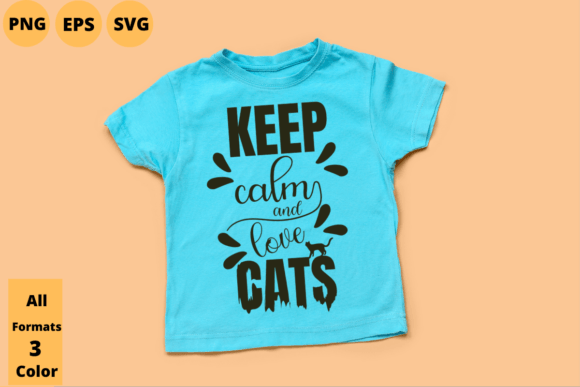
Review: Keep Calm and Love Cats T-shirt Design for Embroidery
As a designer who spends more time at the hoop than away from it, I approach every new digital embroidery file with a mix of curiosity and skepticism. We have all downloaded a "perfect" graphic only to find it turns into a bird's nest of thread once the machine starts running. Today, I am taking a close look at the Keep Calm and Love Cats T-shirt Design. This isn't just a visual critique; it is a practical evaluation of how this asset translates from a screen graphic into a tangible, stitched finished product.
The first thing that strikes me about this design is its mood. It leans heavily into that iconic, retro wartime poster aesthetic but softens it immediately with a feline twist. For an Etsy seller or a boutique owner, this combination is gold. It taps into two massive markets: the nostalgia of the "Keep Calm" motif and the undying love people have for their pets. Visually, the layout is balanced. The typography is bold enough to be legible, which is crucial when you are converting vectors into satin or fill stitches. However, seeing the SVG and EPS files on a monitor is one thing; imagining them under the needle is another.
From Screen to Stitch: A Real-World Scenario
To truly test the viability of this design, I imagined a specific client request. A local cat rescue organization needed a run of merchandise for their upcoming holiday fundraiser. They wanted something unisex, durable, and instantly recognizable. I envisioned using the Keep Calm and Love Cats T-shirt Design on a heavy-weight cotton tote bag and a fleece sweatshirt. These are staple items for any craft business, but they present different challenges.
For the tote bag, the flat surface is ideal. The design's structure would hold up well against the canvas texture. The "Keep Calm" crown element, often a tricky spot in embroidery due to fine details, needs careful attention. If the original graphic relies on very thin lines, those might get lost or cause thread breaks if not adjusted for stitch density. For the sweatshirt, the challenge shifts to fabric texture. Fleece can swallow small details, so the bold lettering in this design is a significant advantage. It ensures the message remains clear even on a fluffy background.
This scenario highlights why having multiple file formats, like the included EPS and SVG files, is essential. As a professional, I rarely use a file "as is." I import these vectors into my digitizing software to tailor the stitch types. I might convert the text to a clean satin stitch for a shiny, premium look, while using a textured fill stitch for the cat silhouette to add depth. The availability of editable files means I am not stuck with a pre-digitized version that might not suit my specific hoop size or thread palette.
Navigating Fabric and Technical Constraints
While the design concept is strong, successful execution depends on respecting the limitations of the medium. There are specific scenarios where you need to proceed with caution. If you are planning to embroider this on a curved surface, like a cap, the layout might need adjustment. The horizontal nature of the text could distort on the front panel of a hat unless the digitizing accounts for the curve.
Similarly, consider the fabric color. The product description mentions three color variations, which is helpful. However, if you are stitching on a dark garment, you must ensure your thread colors provide enough contrast. A light grey cat on a black hoodie might look sophisticated on a mockup but vanish in real life. Always test your thread choices against the actual fabric. Furthermore, if you are working with stretchy knits or thin performance fabrics, the density of the design becomes critical. A heavy block of stitching can cause puckering, ruining the drape of a t-shirt. In these cases, using a high-quality cutaway stabilizer is non-negotiable to maintain the integrity of the handmade product.
Small details also warrant a second look. Does the cat's face have tiny features that require micro-stitching? If so, these areas are prone to jamming on older machines or fraying after repeated washes. For items like kitchen towels or aprons that will see frequent laundering, you might want to simplify the inner details or reinforce them with additional underlay stitching. This is where the "editable" aspect of the files shines; you have the control to simplify complex areas before you ever thread the needle.
Commercial Value and Brand Consistency
For small shop owners and creative entrepreneurs, the visual appeal of a design directly impacts buyer engagement. The Keep Calm and Love Cats T-shirt Design has a friendly, approachable personality that builds immediate trust. It doesn't feel aggressive or overly trendy; it feels timeless. This longevity is vital for building a catalog of design assets that sell year after year, not just during a fleeting trend cycle.
When used for personalized gifts or custom apparel, this design offers a great base for customization. Imagine adding a name below the cat or changing the eye color to match a customer's specific pet. This level of personalization increases the perceived value of the item, allowing you to command a higher price point. Whether it is for baby embroidery on a onesie or a statement piece on a tote bag, the clarity of the design ensures professionalism. A crisp, well-stitched logo tells the customer that you care about quality, which fosters brand loyalty.
Practical Notes for the Studio
Before committing this design to a client project or listing it as a printable mockup in your store, here is my checklist for ensuring success:
- Test on Scraps First: Never run a new design on final fabric without a test stitch-out. Check how the threads interact with the specific material you are using.
- Verify Licensing: The files come in a ZIP format requiring extraction. Before selling finished items or digital products, confirm the license terms. Can you sell the physical embroidered goods? Can you resell the digital files? Clarity here protects your craft business from legal issues.
- Check Hoop Compatibility: Ensure the design dimensions fit your available hoops. If it is too large, you may need to resize it, which can affect stitch integrity.
- Contrast is Key: View your design in black and white. If the elements blend together without color, the stitching might lack definition on certain fabrics.
- Stabilizer Selection: Match your stabilizer to the fabric weight. Heavy designs on light fabric need robust support to prevent distortion.
In conclusion, the Keep Calm and Love Cats T-shirt Design is a versatile asset for the modern maker. It bridges the gap between digital graphics and tactile art effectively, provided you apply proper digitizing judgment. It is suitable for a wide range of applications, from holiday embroidery gifts to everyday commercial embroidery projects. By understanding its strengths and respecting its technical requirements, you can turn this simple graphic into a standout product that resonates with cat lovers everywhere.